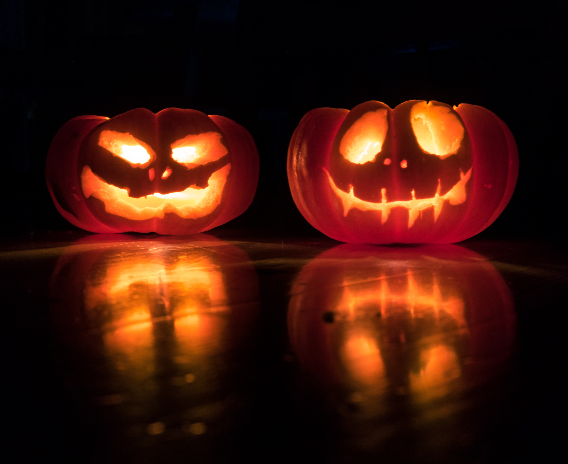
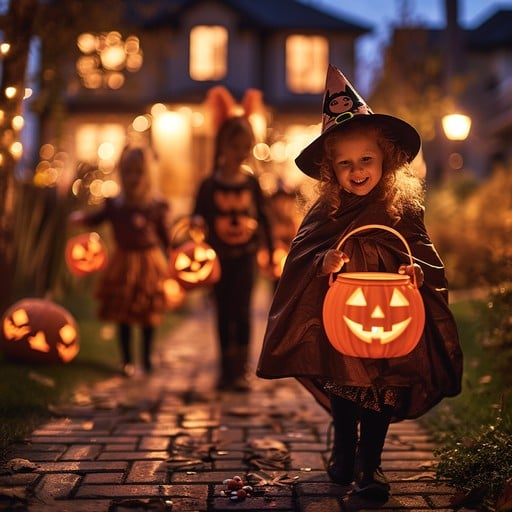
Halloween is one of the most celebrated holidays in North America. Filled with costumes, the promise of treats, and a little fear, this holiday is cherished for bringing people together in the name of spooky decorations, pumpkin carving, and best of all- CANDY!
But if you think about it, what do we really know about Halloween?
Where did it come from, and what is it meant for?
…
WHO is it meant for?
Find out all there is to Halloween in this article!

Where Did It Come From?
To start, Halloween has no specific origin year, but can be traced back to over 2,000 years ago nonetheless. It all began with the festival of Samhain (pronounced sow-in), celebrated close to, if not on, November 1st. This was what the Celts, a group of early Indo-European people specifically of Ancient Ireland, considered as the New Year. This was because it symbolized the end of summer and the beginning of a dark, cruel winter.
And while that’s all well and good, what does that have to do with Halloween, you might ask?
The Festival Of Samhain & It’s Connections to Halloween
Well, the festival of Samhain goes a little deeper than just being a New Year’s day. The eve of the Celt’s New Year was believed to be the day the worlds of both the living and dead collided; those who had passed earlier on would return to visit their homes while others who died sometime in the year ventured to the afterlife, whatever variation of that may be.
The Celts assumed that this day brought a stronger sense of prophecy to the Druids, or Celtic priests, making it easier for them to see the future. To honor their beliefs, large bonfires were built for everyone to gather around and destroy crops and animals as sacrifices. They wore costumes of animal skins and heads, and they would use the sacred fire to light their hearth fires (home fireplaces) to protect them from the following winter.
In a way, the Celts looked up to this tradition as it was a significant source of comfort and hope for them during the winters several couldn’t survive.
Is this starting to sound familiar?
The Addition of Roman Festivals
Later on, the Roman Empire had conquered most of the Celtic territory, and an additional 2 Roman festivals were conjoined with the festival of Samhain. The first of the two being Feralia, meant to acknowledge the passing of the dead sometime in late October, and Pomona, to commemorate the Roman goddess of trees and fruit.
The symbol for Pomona was an apple, and with this Roman festival joining Samhain was likely to be the reason behind Halloween’s tradition of bobbing for apples.
Then we have All Saints’ Day, which was originally known as All Martyrs Day and was celebrated on May 13th, before being moved to November 1st. By the 9th century, November 2nd was considered All Souls’ Day to those of Christianity, and was a day to honor the dead akin to the older, Celtic ways.
They were celebrated very similarly too, up to the point several people believe All Souls’ Day was created to replace Samhain with a more church-approved ideal.
Eventually, All Saints’ Day began to be called by different names, from All-hallows and All-hallowmas, and the night before (also known as Samhain Eve) began to be known as All-Hallows Eve. In the end, the name Halloween was formed and that was what stuck.
Conclusion
Isn’t it interesting to see that the original celebrations’ eve is more popular than the tradition itself today? Though it’s considered to be a more light and fun annual holiday for all, Halloween comes with a LOT of history you may have never even expected- you’d be surprised to see how much there really is to it.
Sources
HISTORY.com Editors. “Halloween: Origins, Meaning & Traditions | HISTORY.” HISTORY, 18 Nov. 2009, www.history.com/articles/history-of-halloween. Accessed 29 Oct. 2025.
Nangia, Tamanna. “Halloween | Definition, Origin, History, Traditions, & Facts.” Encyclopedia Britannica, 20 July 1998, www.britannica.com/topic/Halloween. Accessed 29 Oct. 2025.
Britannica Editors. “Celt | History, Institutions, & Religion.” Encyclopedia Britannica, 20 July 1998, www.britannica.com/topic/Celt-people. Accessed 29 Oct. 2025.